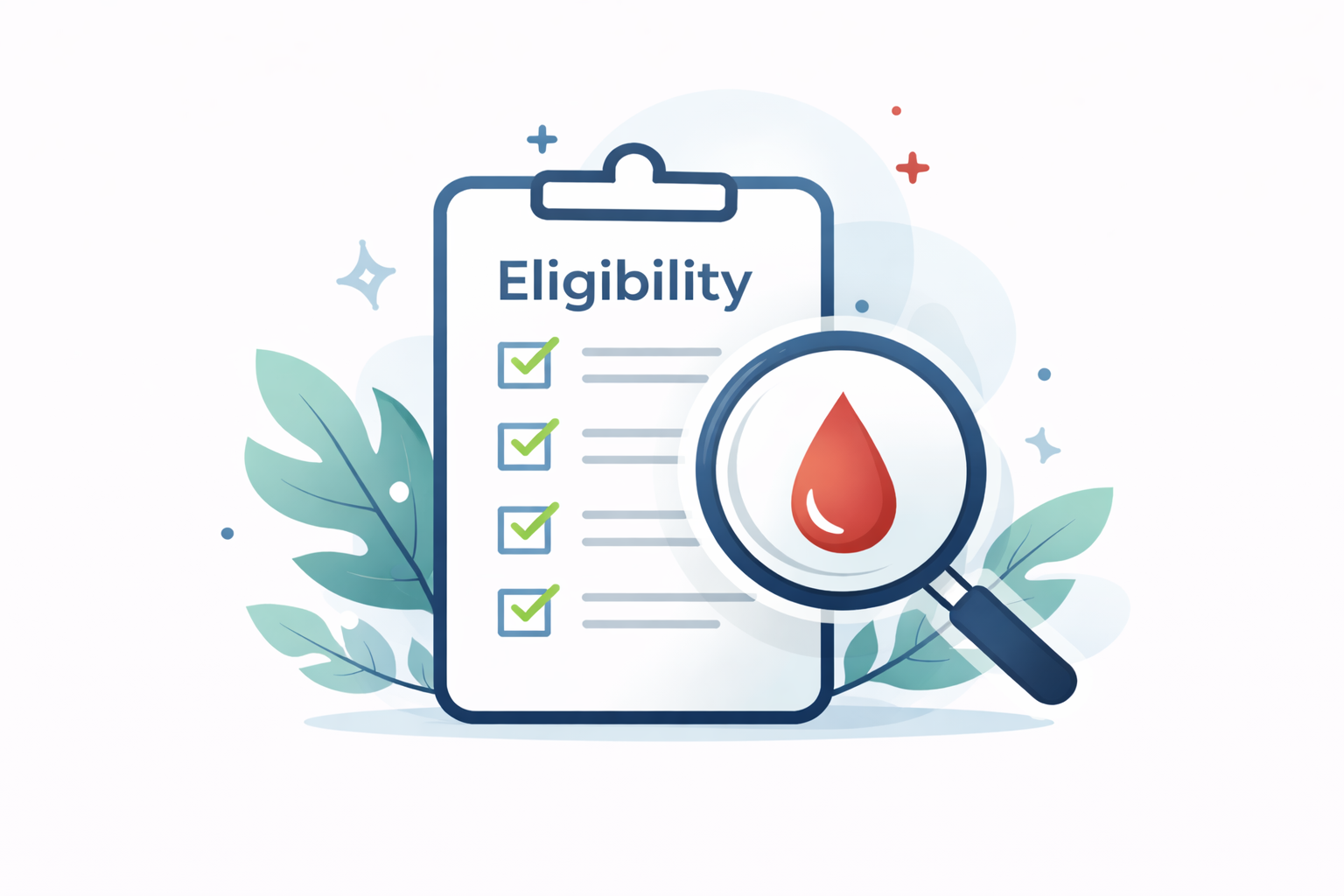
Most people can donate blood if they are in good general health. However, there are important criteria you must meet to ensure both your safety and the safety of recipients.
Please see the WHO recommendations for more information
Below are the general eligibility guidelines:
Age Requirements
You must be between 18 and 65 years oldIn some regions:
Individuals aged 16 to 17 may donate with parental/guardian consentRegular donors over 65 may be accepted at a physician’s discretionWeight Requirements
You must weight at least 50kgIn some cases, a minimum of 45kg is accepted for smaller-volume donationsHealth Conditions
You must be in good health at the time of donation.
You cannot donate if you:
Have a cold, flu, sore throat, or any infectionHave a stomach illness or cold soreAdditional considerations:
Recent tattoo or piercing - wait 6 months (if done by licensed professional and fully healed - wait 12 hours)Dental treatment: Minor procedure - wait 24 hours; Major procedures - wait 1 monthHaemoglobin Levels
You must meet the minimum haemoglobin level: at least 12.g/dl (female); at least 13.0g/dl (male)A test will be carried out at the donation siteTravel Considerations
Travel may affect your eligibility.
You may be temporarily deferred if you:
Have recently travelled to areas with mosquito-borne diseases (e.g. malaria, dengue, Zika)Have lived in or visited certain regions linked to vCJD risksBehavioural Eligibility
You must not donate blood if:
You have engaged in high-risk sexual actibity in the past 12 monthsYou will be permanently deferred if you:
Have tested positive for HIVHave ever injected recreational drugsPregnancy and Breastfeeding
You should not donate during pregnancyAfter Pregnancy:
Wait for a period equal to the duration of the pregnancyPlus at least 3 months after breastfeeding has significantly reducedBefore You Donate
If you are unsure about your eligibility, we recommend consulting a healthcare professional or contacting your local blood donation center.